Manual warehouses bleed margin.  Intelligent systems create it

Integrated intralogistics infrastructure that transforms operations into measurable competitive advantage.

Warehouse operations are under pressure. Labor costs are up 38%, turnover is 36%, and same-day fulfillment is now expected at scale. Rising space costs expose the limits of manual workflows. Modern Expo turns warehouses from cost centers into profit engines.

The challenge isn't space — it's intelligence

Order accuracy crisis

Industry average 85-90% creates 1.4% annual revenue loss from shrinkage; each mispick costs €100

Throughput bottlenecks

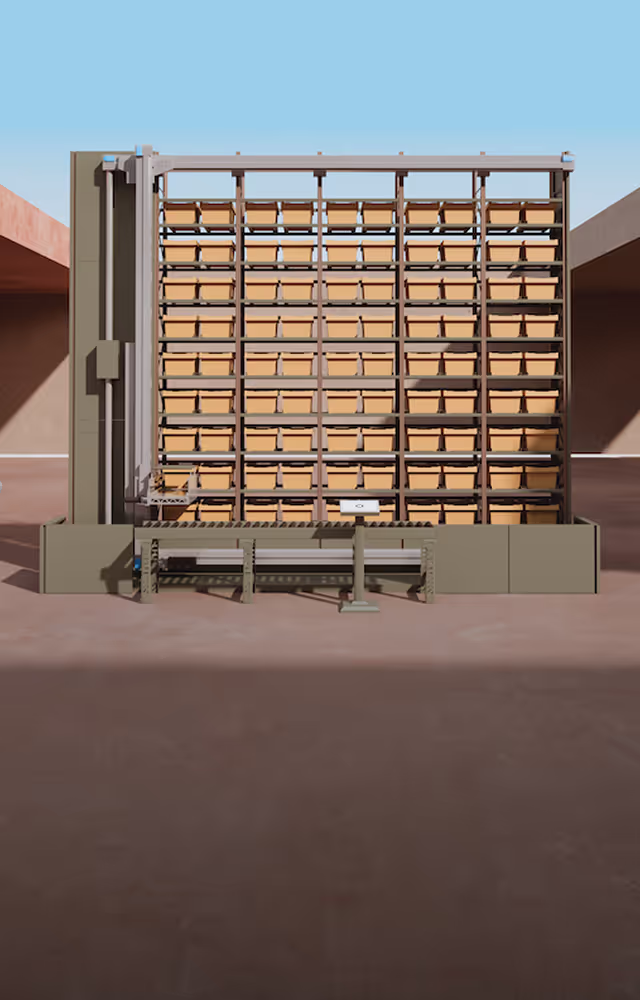
Manual picking achieves 50-100 picks/hour vs 300-1,000+ with goods-to-person systems

Returns complexity

E-commerce returns reach 20-30% vs <10% traditional retail, straining reverse logistics

Peak season chaos

Demand spikes of 200-400% overwhelm fixed infrastructure, causing 30% productivity drops

Energy waste at scale

Refrigeration represents 40-60% of facility energy costs; inefficient layouts multiply consumption

Space efficiency failure

Traditional layouts achieve 80-85% capacity utilization vs 95%+ with high-density systems

FIFO enforcement gaps

Manual processes risk spoilage; automated systems enforce first-expiry-first-out with 99.9%+ compliance

Temperature integrity risks

Manual operations in cold zones (-28°C) reduce picking speed 40%; goods-to-person eliminates exposure

JIT delivery failures

Production line stoppages from stockouts cost €5,000-50,000 per hour depending on industry

Kitting accuracy issues

Manual assembly kitting achieves 92-95% accuracy; automated sequencing reaches 99.8%+

Omnichannel complexity

Modern DCs serve B2B bulk, B2C picks, and store replenishment simultaneously—manual systems can't balance

SKU explosion

Product variety increased 300% in decade; traditional slotting creates picker walking distances 30-40% longer than optimal

Integrated systems either scale profitably or drain capital. Modern Expo delivers infrastructure proven across demanding operations.

Transform Efficiency.

5-30% gains within 90 days

Integrated systems combining storage infrastructure, WMS optimization, and automation deliver measurable improvements. Companies achieve 99.5%+ order accuracy, eliminating €100-per-error costs while increasing throughput without proportional headcount.

Maximize space.

20% improvement without expansion

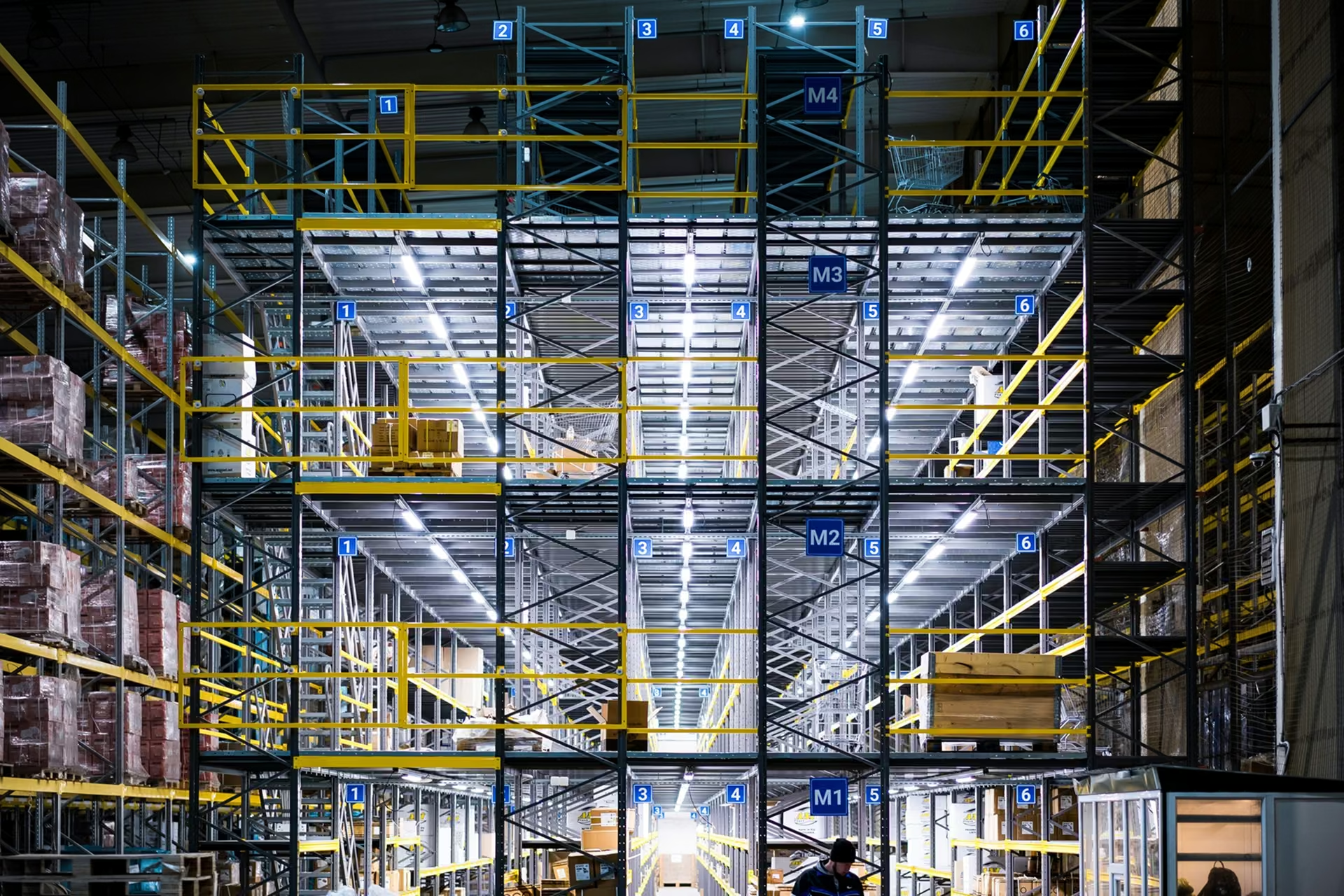
Velocity-based slotting places fast-movers in prime locations. Dynamic storage allocation continuously re-optimizes. Vertical utilization reaches 95%+ capacity versus 80-85% industry average. With 850 million additional square feet of warehouse capacity needed globally, optimizing existing space becomes essential.

Scale Gradually.

Compact size for constrained locations

Add storage capacity, automation components, and throughput incrementally. Deploy high-impact zones first—fast-moving pick areas, specific categories, individual sections. Successful pilots build confidence before facility-wide rollout. No massive upfront investment. No operational disruption during expansion.

Deliver ROI.

18-24 month payback

Performance improvements prove transformative: 30% enhanced stock efficiency reducing inventory carrying costs, 20% labor cost reductions through optimized workflows, 20-40% throughput increases, and 60%+ reductions in picker walking time. Cloud-based WMS deployments complete in 60-90 days versus 9-12 months for legacy systems.

Warehouse transformation requires more than equipment—it demands integrated expertise from facility analysis through ongoing optimization.

Strategy

Strategic assessment identifies opportunities

Analyze current operations identifying bottlenecks, space constraints, and improvement potential. Map material flows and SKU velocity profiles. Develop layout concepts maximizing throughput within existing buildings. Create ROI models with realistic payback timelines based on proven implementations.

Manufacturing

Engineering precision at manufacturing

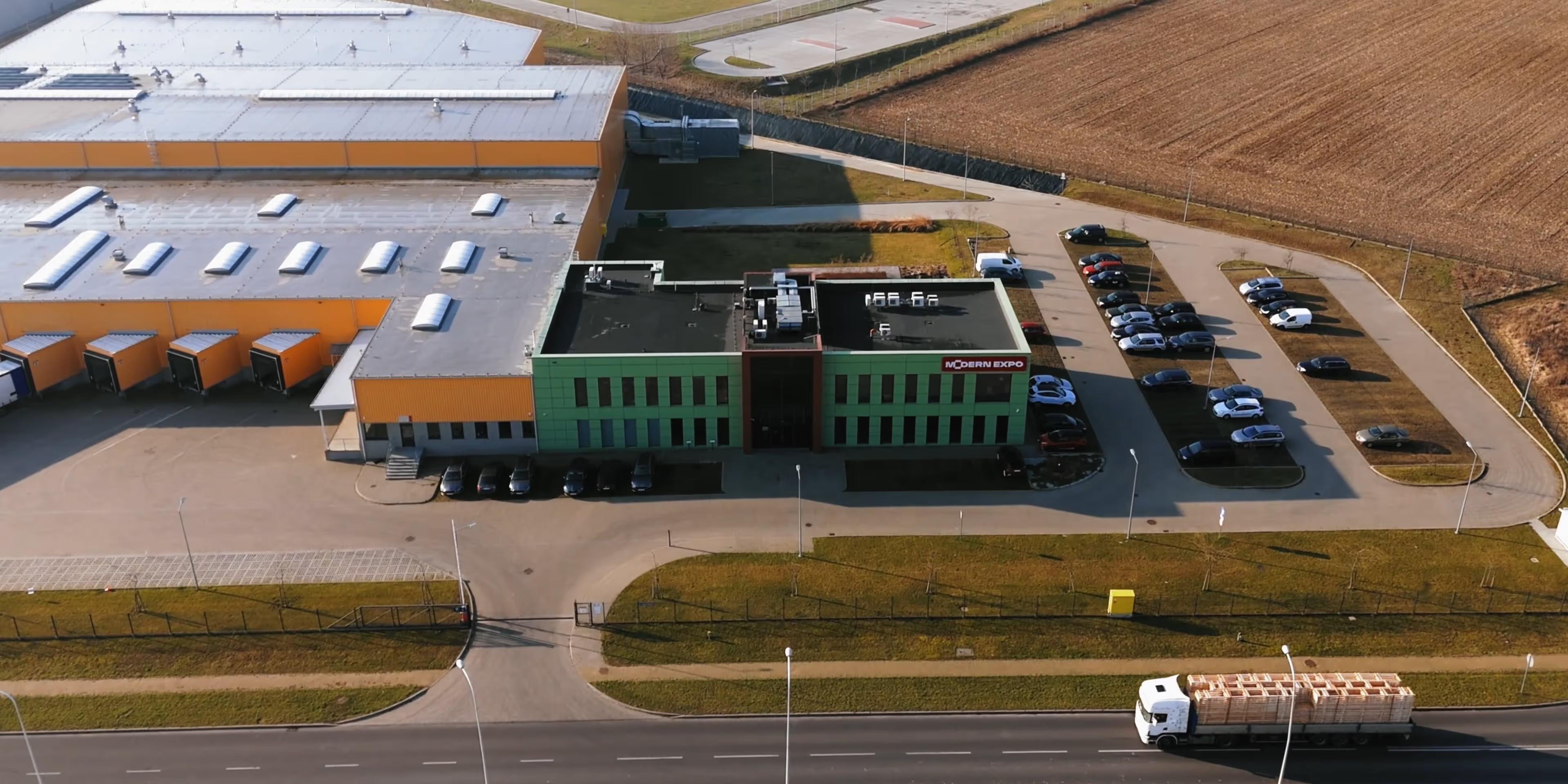
Almost a 100k m2 across specialized production units. Automated manufacturing lines deliver repeatable quality whether deploying one facility or enterprise-wide rollouts. ISO 9001 certified quality management ensures consistency. All systems meet EN and FEM safety standards.

Deployment

Phased deployment minimizes disruption

Install storage infrastructure during off-hours or in discrete zones. Integrate software with parallel legacy systems. Validate performance before full cutover. Start with high-impact areas demonstrating clear benefits—proven pilots reduce risk and accelerate scaling.

Intelligence

Software intelligence orchestrates operations

Leading WMS platform integration or complete turnkey software suites. Real-time inventory visibility. Wave planning and batch picking optimization. Route optimization reducing travel 30-40%. Velocity-based slotting continuously adapting to demand patterns. WES coordination between strategy and equipment control.
Adoption

Change management drives adoption

Allocate 10% of project budgets to organizational change. Identify internal champions. Provide comprehensive training before go-live. Address resistance proactively. Successful transformation requires operational and organizational alignment.

Support

Lifecycle support ensures uptime

Remote monitoring and predictive maintenance prevent failures. Field service teams minimize downtime. Modular upgrade paths keep installations current as technology evolves and throughput demands increase.

Intelligent storage systems engineered for performance

01/06

Distribution centers

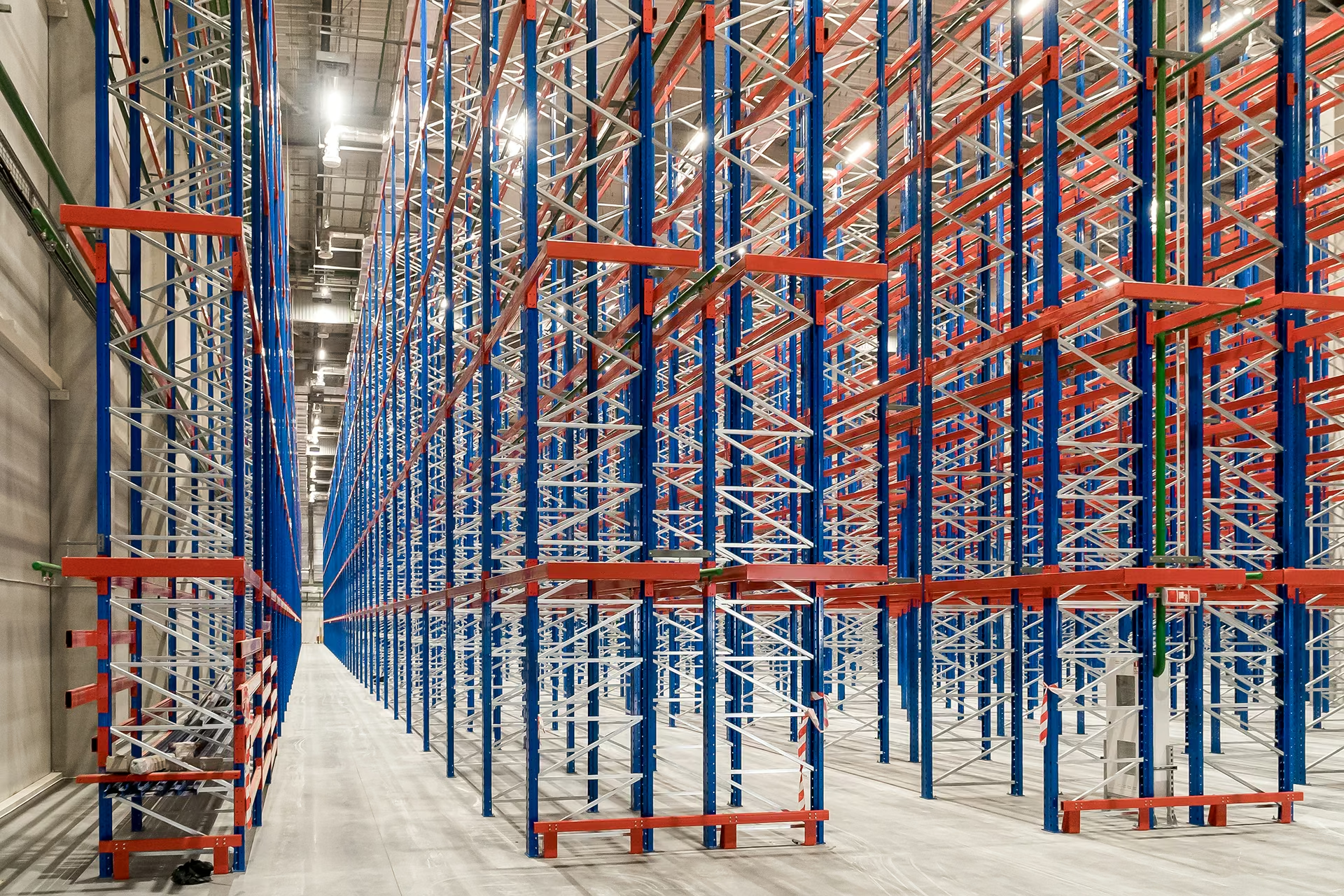
Large-scale multi-function facilities with integrated zones for receiving, storage, picking, and shipping. Scalable layouts supporting 80,000+ pallet positions across multiple temperature zones and product categories.

Next: E-commerce operators
01/06

E-commerce fulfilment

3PL and distribution center operations managing multi-client inventory with cross-docking zones for rapid sortation. Hub-and-spoke models with real-time visibility achieving 70%+ order fulfillment under 90 minutes.

Next: E-commerce operators
01/06

Dark stores & micro-fulfilment

Eliminate production line stoppages through reliable JIT delivery. Automated kitting and sequencing reduce assembly time and defects. Kanban integration achieving 75% inventory reduction while maintaining continuous production flow.

Next: E-commerce operators
01/06

3PL & logistics operators

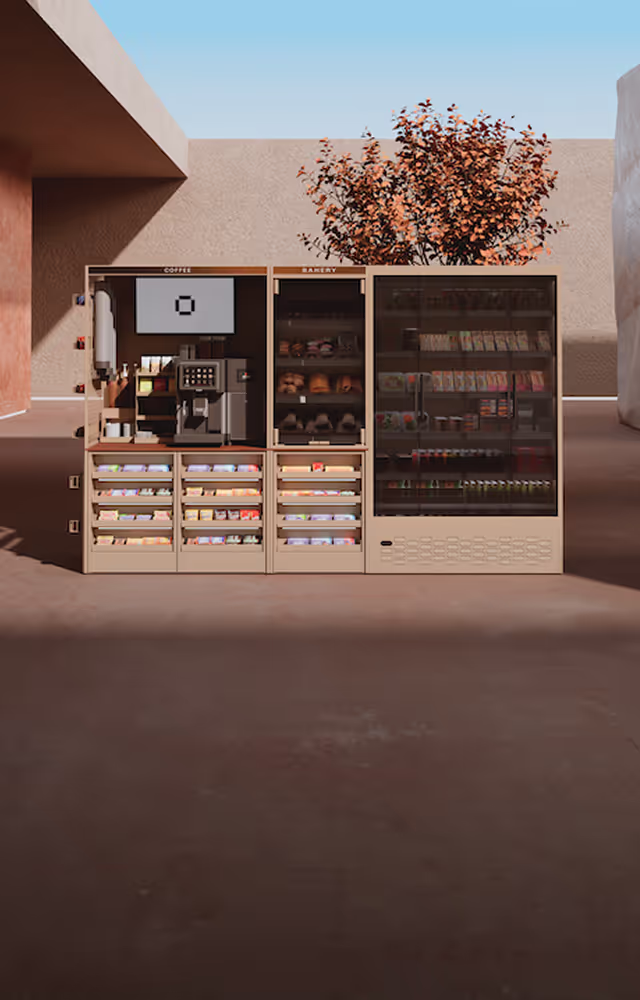
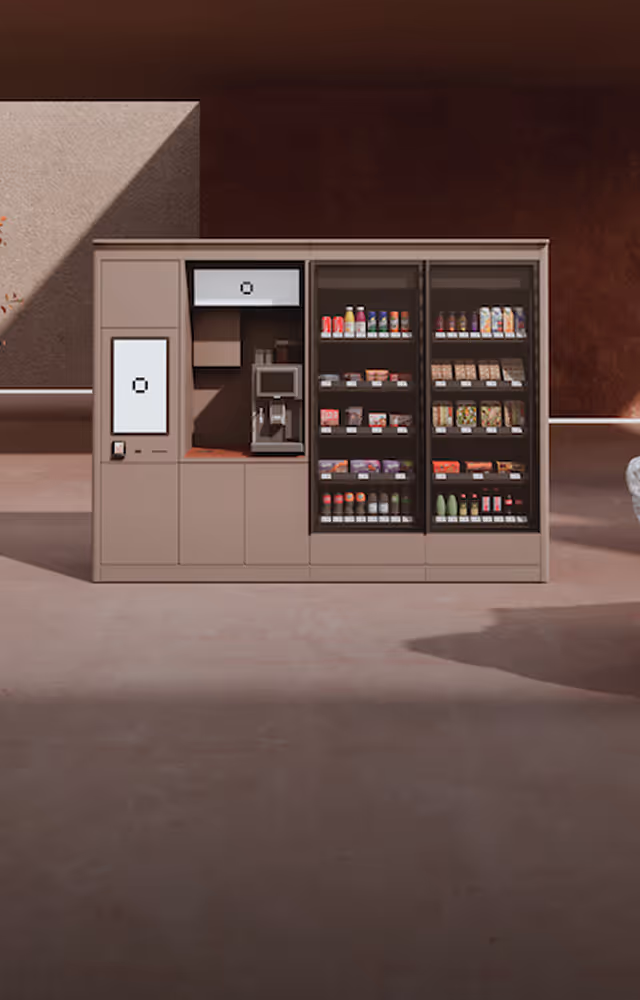
Highly automated urban fulfillment centers operating 24/7 with minimal human intervention. Robotics and AI-powered systems enable same-day delivery from 3,000-10,000 sq ft facilities strategically placed near consumers.

Next: E-commerce operators
01/06

Retail warehouse networks

Balance competing priorities: store replenishment, e-commerce fulfillment, omnichannel orders. Integrated systems prevent inventory allocation conflicts while maximizing space utilization across all channels.

Next: E-commerce operators
01/06

Manufacturing & industrial facilities

Balance competing priorities: store replenishment, e-commerce fulfillment, omnichannel orders. Integrated systems prevent inventory allocation conflicts while maximizing space utilization across all channels.

Next: E-commerce operators

Seamless integration with leading WMS platforms or complete turnkey software suites for operators requiring full-stack solutions.

Real-time inventory management

Visibility across all locations. Automatic cycle counting. ABC velocity tracking. Lot/serial control. FIFO/FEFO enforcement.

Order fulfillment optimization

Wave planning and batch picking. Multi-order strategies. Dynamic route optimization. Pick-to-light and voice-directed workflows. Real-time performance monitoring.

AI-powered space optimization

Velocity-based slotting placing fast-movers in prime locations. Dynamic storage allocation continuously re-optimizing based on demand patterns. Machine learning algorithms analyzing SKU velocity, affinity patterns, and pick paths.

Automation orchestration

WES layer coordinating between WMS strategy and equipment control. Real-time monitoring. Predictive maintenance alerts cutting downtime 30-40%. Load balancing across automation zones.

IoT and sensor networks

RFID tags enabling contactless identification achieving 99.9%+ accuracy. Environmental sensors monitoring temperature/humidity with instant threshold alerts. Bluetooth beacons providing precision positioning eliminating scanning bottlenecks.

Analytics and continuous improvement

KPI dashboards tracking throughput, accuracy, labor efficiency. Predictive analytics identifying bottlenecks before they impact operations. Digital twin technology testing layouts and workflows virtually before physical implementation.

AMR/AGV coordination

Visibility across all locIntegration with autonomous mobile robots and guided vehicles. AI-powered obstacle avoidance and route optimization. 24/7 operation reducing labor dependency while increasing throughput flexibility.ations. Automatic cycle counting. ABC velocity tracking. Lot/serial control. FIFO/FEFO enforcement.

Voice and wearable technology

Voice picking achieving 99.9% accuracy with hands-free, eyes-free operation. 67% reduction in picking errors versus paper systems. 85% reduction in training time. Particularly valuable in cold storage where workers wear gloves.

Cloud deployment

60-90 day implementation versus 9-12 months on-premise. €50-200 per user monthly with automatic updates versus €2,500-200,000 perpetual licenses requiring dedicated IT staff.